Viareggio in high summer has roughly one gelateria per hundred paces of seafront. Most are bad. Most of the bad ones do steady business, because a traveller squinting at a backlit menu cannot tell a morning-made hazelnut paste from a commercial base reconstituted out of a twenty-kilo sack.
We walked it over four September weekends.
Our Scoring Rubric
Four axes, each scored out of five. No weighting; numbers are summed. A producer's worst axis caps trust, on the theory that cheating on one category means cheating on the others by October.
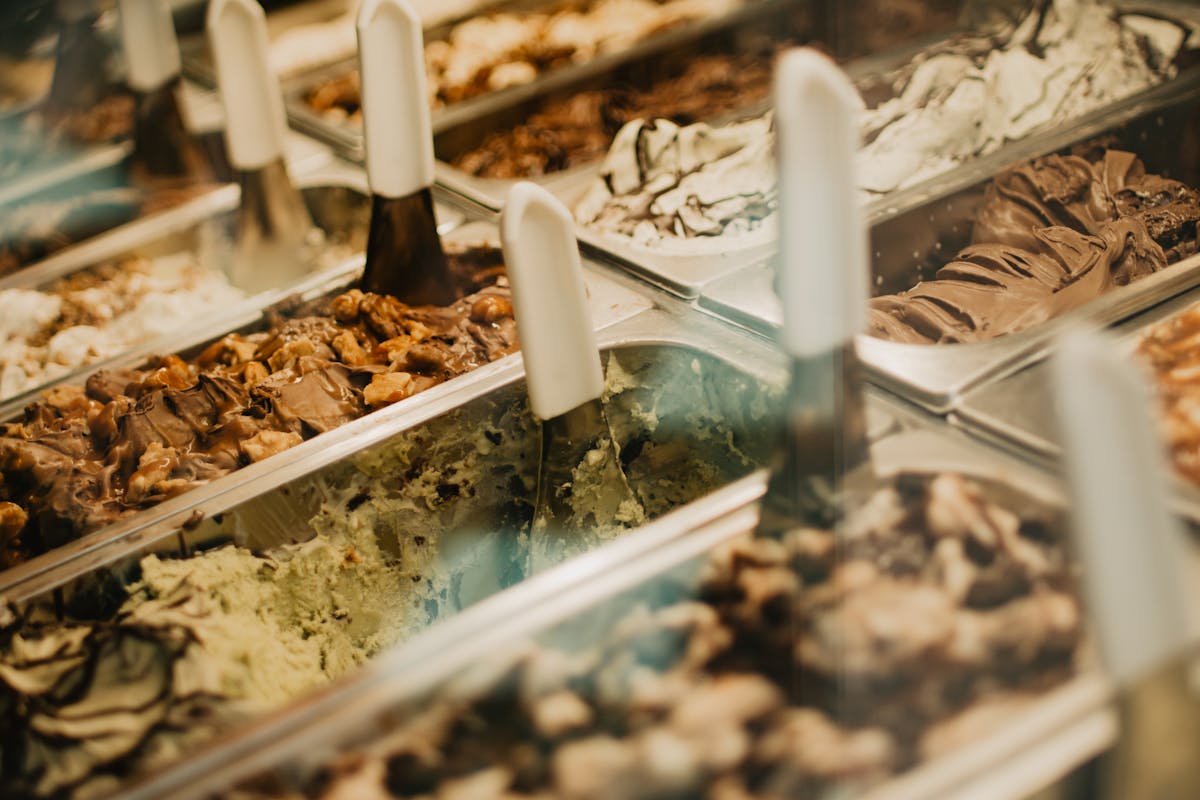
- Texture. Dense, not fluffy. Artisan gelato carries less air than industrial ice cream — flatter scoops, heavier mouthfeel, crystals fine enough to be undetectable. A pistachio peak standing up like whipped cream has been aerated with stabiliser.
- Seasonality. A strawberry on sale in December is imported or a lie. A shop rotating its fruit with what the canal market is landing gets a five; a laminated menu held steady from April to Halloween gets a two.
- Flavour honesty. Pistachio khaki, not neon. Mint not blue. Banana not bubblegum. A short ingredient card — milk, sugar, Sicilian pistachios, salt — beats any award plaque.
- Price. Small cup €2.50 – €3.50; large around €4.50. Cheaper is industrial. Dearer is brand rent: a €6 cone is not better than a €3 cone, only differently marketed.
Three Producers, Ranked
We will not name the shops. Viareggio is small, and a directory built to last a decade should not pin itself to a signboard that may change hands in two years. Addresses are generic; verdicts are not.
| Producer | Texture | Seasonality | Flavour honesty | Price | Total |
|---|---|---|---|---|---|
| A family laboratorio, via Battisti | 5 | 5 | 5 | 4 | 19 / 20 |
| A back-street shop, two blocks off the Passeggiata | 4 | 4 | 4 | 5 | 17 / 20 |
| A newer operation near Piazza Cavour | 4 | 3 | 4 | 3 | 14 / 20 |
The family laboratorio on via Battisti is the one to beat. Pozzetti, a handwritten card of six or seven flavours changed monthly, a September fig sorbetto tasting of the garden behind the counter. Its pistachio arrives the correct unglamorous khaki, without theatre.
A back-street shop two blocks off the seafront scores lower on seasonality — the menu held steady across three visits — but takes a rare five on price: €2.50 for a generous small cup, cash only, no queue. Hazelnuts are ground on the premises. A local's address, unsentimentally run.
Our newer operation near Piazza Cavour is competent. Its menu, however, sprawls to twenty-four flavours — twice as many as any artisan can turn over before back stock crystallises.
Short menus make serious gelato. Six flavours changed weekly beats twenty-four held steady. If a producer will not tell you what is in the pistachio, the answer is almost always "too much."
The Disqualification
A fourth shop on the Passeggiata proper was sampled and disqualified before scoring. Criteria are the opposite of the rubric, in four concrete signs:
- Towering mounds above the rim, held up by stabiliser and air.
- Neon colours — pistachio the shade of traffic paint, mint the blue of toothpaste, banana the yellow of a highlighter.
- Uniform texture across every flavour, whether fruit sorbetto or dairy cream. One base, many colourings.
- Synthetic flavourings in fruit not in Italian season: blue-raspberry, "bubblegum", an aggressively orange mango in September.
One of these is a warning. Three disqualify. This shop had all four, plus a queue thirty deep — an adequate proxy for marketing spend and a poor proxy for quality. Slow Food Italy's criteria are stricter still; ours are a conservative subset.
What to Order
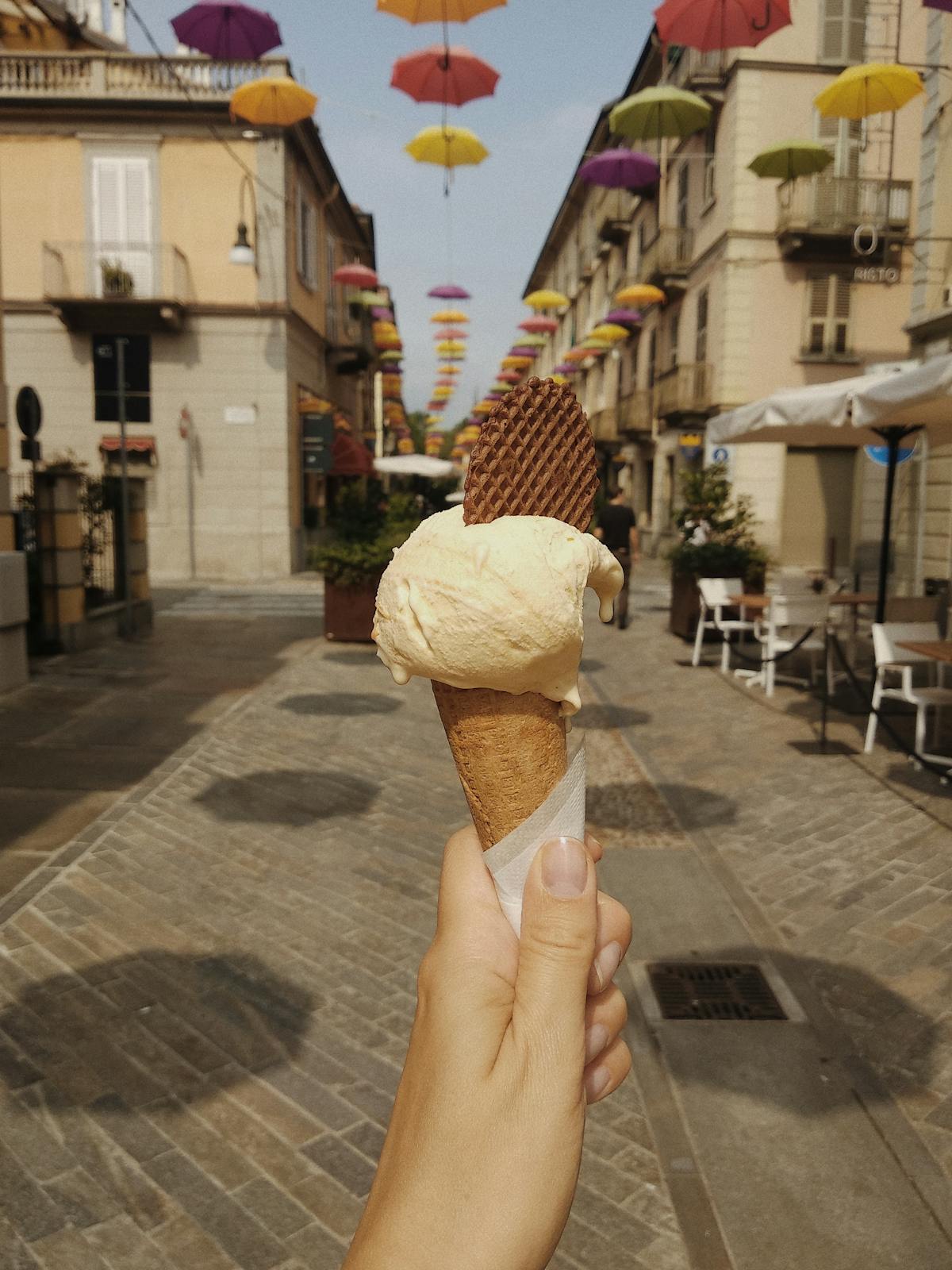
Small cup, not cone. A cone makes a better photograph; a cup a better assessment. Paper isolates the flavour from wafer sweetness and lets you watch the melt — at a good shop slow and uneven, sorbetto giving up first, dairy holding a cleaner edge.
Two scoops, contrast chosen. Fior di latte against dark chocolate is the classic probe. If fior di latte tastes of milk rather than vanilla extract, the base is honest. If chocolate registers as chocolate rather than cocoa-flavoured sugar, the cocoa is too.
Avoid the flavours that tempt a shop to cut corners: stracciatella (easy to fake with chocolate chips in any base), cookies-and-cream variants (almost always imported), and anything blue.
Closing Notes
A sampling strategy, not an exhaustive survey — one afternoon to separate the artisan from the reconstituted. Reliable about four times in five.
Two producers here run March to October, tracking the beach season. Our via Battisti laboratorio stays open year-round at reduced hours — itself a small endorsement: selling gelato in February requires either a local clientele or a conscience about the craft, and often both.
For broader context, Lonely Planet's Versilian coast pages; crowd verdicts at TripAdvisor are worth reading inverted. See also Cecìna & Farinata, Gran Caffè Margherita, and The Canale Burlamacca Dawn Market.