Drive inland from the coast on a clear morning and the Apuan Alps appear as a wall of grey-white against the sky — except that white is not snow. It is the cut face of a working quarry, and above Carrara there are over a hundred of them.
One of the oldest continuously extracted stone sites on the planet. Romans pulled block from this basin in the first century BC. Michelangelo came personally in 1497 to choose the marble for the Pietà, and returned for the block that became the David. Operation has not stopped since — though scale has changed.
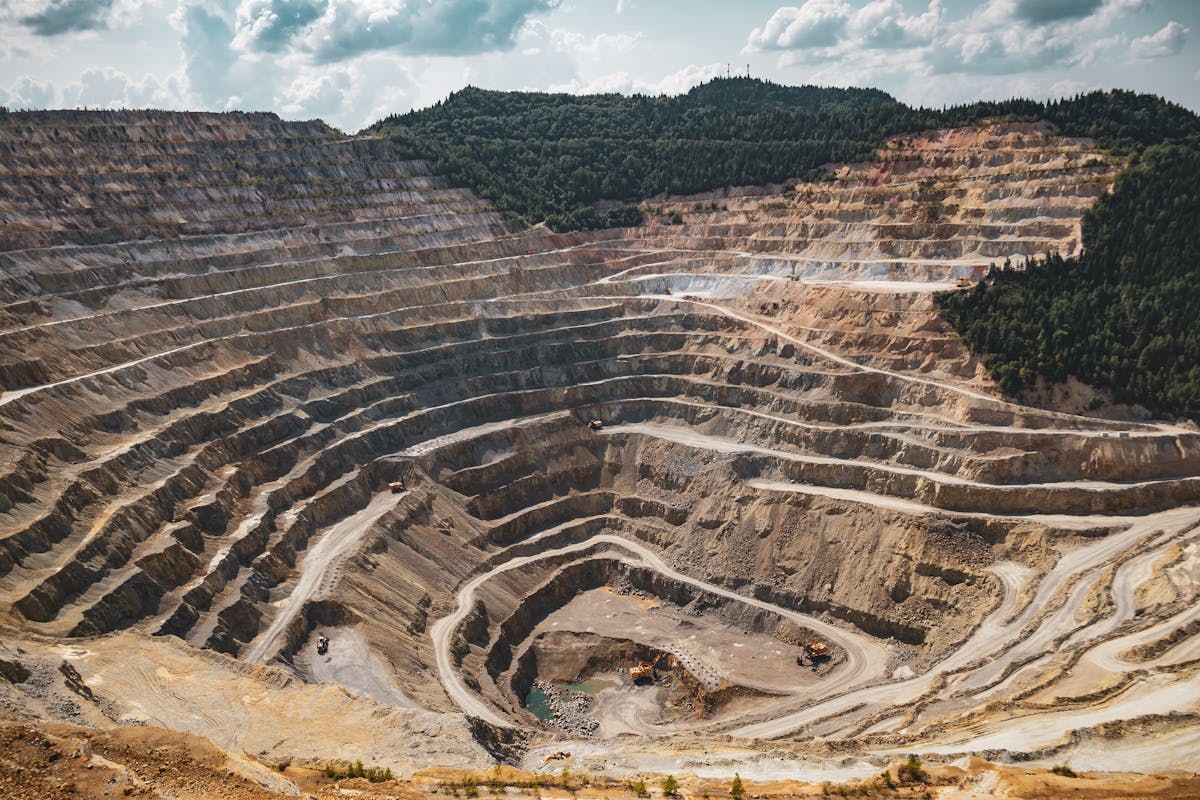
What you're actually looking at
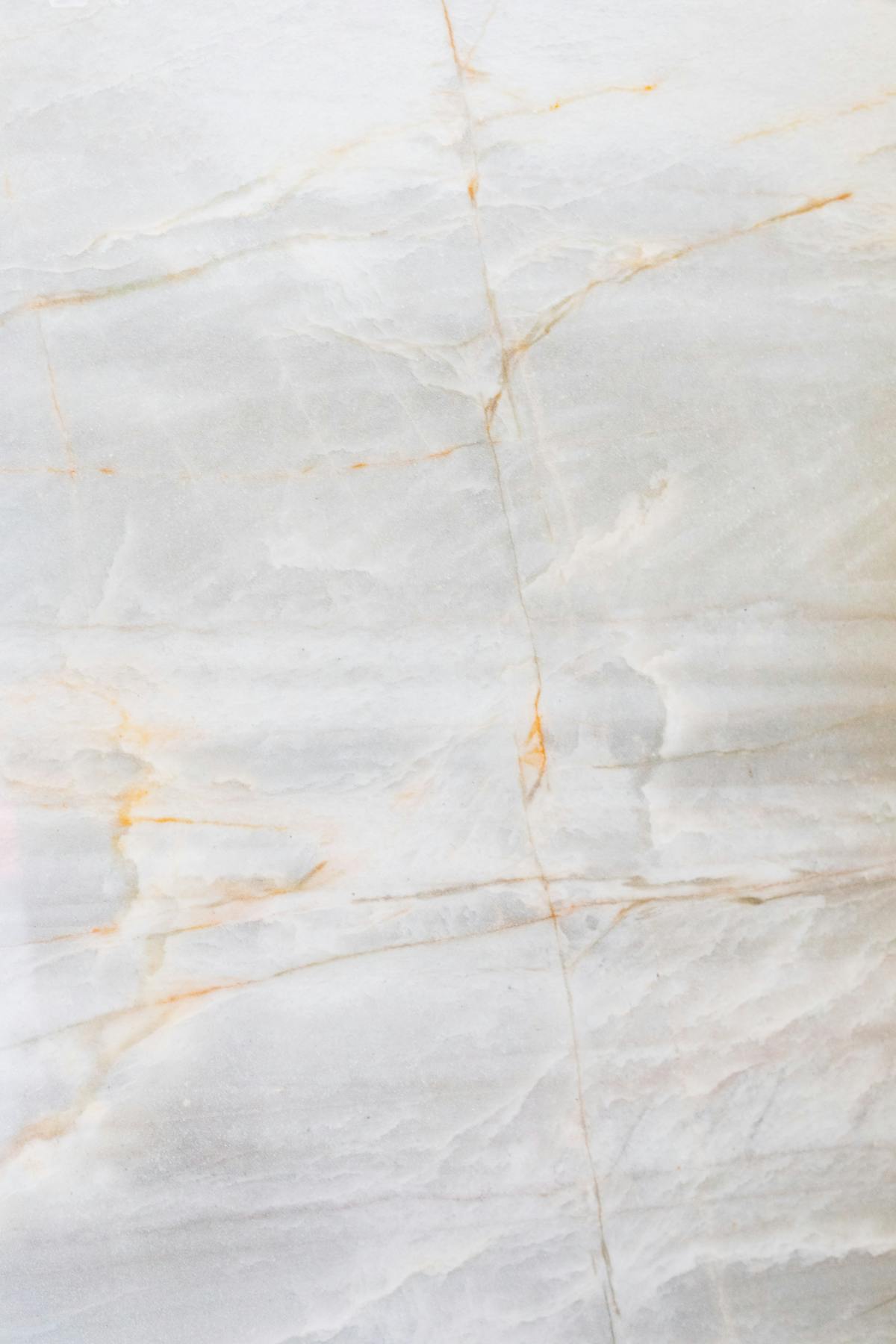
Geology first, briefly. A block of metamorphosed Jurassic limestone, cooked and compressed into calcium-carbonate marble somewhere between twenty and thirty million years ago. It cuts cleanly, polishes brilliantly, and occurs in seams wide enough to yield architectural blocks four or five metres a side. Carrara marble, strictly speaking, means stone from the three main basins — Colonnata, Fantiscritti, and Torano — each named for the hillside village at its mouth.
A visitor does not see a single hole in the ground, but the accumulated removal of entire mountainsides over two thousand years. Earliest workings are invisible — the rock above them was long ago taken out. What remains is a landscape of benched terraces, each a step where one generation of extraction stopped and the next began lower down.
At a working quarry, cuts are made with diamond-wire saws that run for hours through a single bench, ringing the marble like a tuning fork. Noise is constant; dust is white; haul trucks move continuously on ramps cut into the spoil.
Picturesque it is not. Impressive it certainly is — among the more striking industrial scenes in Europe, up there with the salt flats of Añana and the open pits of the Ruhr.
Three tour operators, honestly compared
Two tiers. At the bottom, a paid shuttle drops a coach at a viewpoint above a quarry, hands out a souvenir photo, and returns to Carrara. At the top, a licensed guide takes a small group in a 4WD inside an active extraction site, past working saws and loaded trucks. Gap between the two is not narrow.
| Operator | Format | Price (adult) | Duration | What you get |
|---|---|---|---|---|
| Cave di Fantiscritti (Cava Museo) | Quarry-yard viewpoint plus small museum; optional minibus inside | €10–25 depending on add-ons | 1–1.5 hrs | Decent introduction, static, photo-friendly |
| Marmotour (4WD inside active sites) | Jeep tour into a working quarry, guided | €40–55 | ~2 hrs | Active machinery, dust, close-up rock faces |
| Generic "Carrara marble tour" coach sold at Viareggio kiosks | Bus to scenic viewpoint above Torano; souvenir photo | €30–45 | Half day, mostly the drive | A photograph and a gift-shop stop |
Avoid the coach product.
Not a scam — viewpoint is real, photo is real — but the experience is a bus park with a guardrail. For the same money and an hour more, a 4WD tour goes inside a site actually producing stone this afternoon.
A working quarry is not a museum. If the guide is not asking the operator for permission to enter on the morning of the tour, nothing is happening that the public is not already watching from the road.
Provider choice: Marmotour and a handful of smaller 4WD operators hold the access permissions that matter. Guides are often former quarry workers or geologists; vehicles are short-wheelbase Defenders and Pajeros, because ramps inside a working site are narrow. Book direct or via the Carrara tourist office. Hotel concierges push the coach product on commission; it is still the wrong answer.
The museum option
At the mouth of the Fantiscritti basin, a short drive up the strada provinciale from Carrara centre, sits a small open-air museum run by the Walton family, longtime quarriers. Cava Museo is not large — it occupies buildings of an abandoned extraction yard — but it's the best short introduction on site. Vintage tools; an explanation of the filo elicoidale (helical wire-cutting that replaced hand quarrying around 1895); scale models of cableways that used to run stone down to the port at Avenza; a yard of demonstration blocks.
Admission in April 2026 runs around €10 for adults, less for children. Worth the detour on its own; combined with a Marmotour 4WD run, it makes a full and honest afternoon. Most reasonable quarry itineraries pair the two — museum for context, jeep for the live site. Small café does an adequate espresso. Do not expect lunch.
The environmental side
A visitor arriving now is arriving at a working argument. Roughly three-quarters of what comes off these mountains today is not block for sculpture or façade, but crushed chip sold to the calcium-carbonate industry — filler in toothpaste, in paper coatings, in plastic, in antacid tablets. Block-grade marble has margins measured in thousands of euros per tonne; industrial chip in tens. Volumes required to extract chip, however, are enormous. Rate of removal has accelerated sharply since the late 20th century.
Parco delle Alpi Apuane, a regional park established in 1985 and documented by parcoapuane.it, covers part of the range but excludes most of the active quarry concessions — a compromise that environmental groups read as capture and quarrying interests read as survival. Municipal caps on extraction volume have been debated for over a decade; enforcement has been uneven. A small but persistent local movement argues, credibly, that quarries are removing an ecosystem faster than any recovery is possible.
- Public attention rose after the documentary Il Capo circulated internationally.
- Apuan range is not a UNESCO site; proposals to list portions as a geological World Heritage site have stalled against the economic weight of the industry.
- For coverage from outside the region, Lonely Planet's Tuscany pages carry a cautious summary; European broadsheet reporting is richer and less tidy.
We note it here because a traveller who takes a quarry tour is, inescapably, part of the thing. Money goes partly to the operator and partly, via concession, to the quarry itself.
Not a reason to skip. A reason to understand what is being bought.
Practical notes
- Getting there. From Viareggio, A12 Genova-bound to the Carrara-Avenza exit, roughly forty minutes. Rail: a regional train to Carrara-Avenza in about an hour, then a local bus or taxi up the strada dei marmi to Colonnata or Fantiscritti.
- Book ahead. April through October, serious 4WD operators fill a week out. Saturday mornings sell first. Coach-tour slots are always available; that is itself a signal.
- Wear. Closed shoes, a layer, sunglasses. Dust is white calcium-carbonate and fine; contact-lens wearers report grief.
- Lunch after. Colonnata is the village that gave its name to lardo di Colonnata — pork fat cured in marble basins. A slice on toasted bread with a glass of Vermentino, at one of three trattorie on the square, is the appropriate end to a quarry morning.
- Avoid. Any coach tour promising "inside a working quarry" under €25 a head. Almost certainly a viewpoint tour with a stop at a warehouse gift shop.
For what the marble becomes once sculptors take possession, see The Pietrasanta Marble Studios — a short drive south where block turns into finished work. For a longer inland day that pairs naturally with Carrara, Lucca as a Half-Day Trip works well on the return. And for cultural programming within the Versilia itself, La Versiliana Literary Festival covers the other pilgrimage the region supports.