Lucca is the walled town every other Tuscan walled town compares itself to, usually unfavourably. It sits twenty-six minutes by regional train from Viareggio Stazione, inland and slightly uphill. A flat centre, a complete ring of ramparts, a cathedral smaller than expected — and the smaller-than-expected part is the point.
Day-trippers over-schedule it. They pile in mid-morning, tick off the Duomo, eat an indifferent lunch on a named piazza, and leave before the light gets good. A better version of the same day exists, and it involves spending most of it on top of a wall.
Why Four Hours Is Enough
Most directories recommend a full day. We disagree, at least for travellers based on the coast with dinner plans back in Viareggio. Four hours covers the walls, one church, one piazza, one museum, and a coffee. Six hours allows a proper lunch and a second circuit of the ramparts at a different hour. Longer risks a late-afternoon slump in a shuttered town where everything useful closes between one and four.
A defensible itinerary, starting from Lucca station:
- Walk ten minutes to Porta San Pietro and go up onto the walls.
- Half-loop the ramparts anti-clockwise to Porta Santa Maria (about 2 km).
- Descend for San Michele in Foro, then Piazza dell'Anfiteatro.
- Lunch or a coffee one street off the Anfiteatro.
- Casa Natale di Puccini, via di Poggio 30 — twenty minutes, no more.
- Complete the wall loop if time permits; catch the regional back.
The Walls — Walk or Cycle
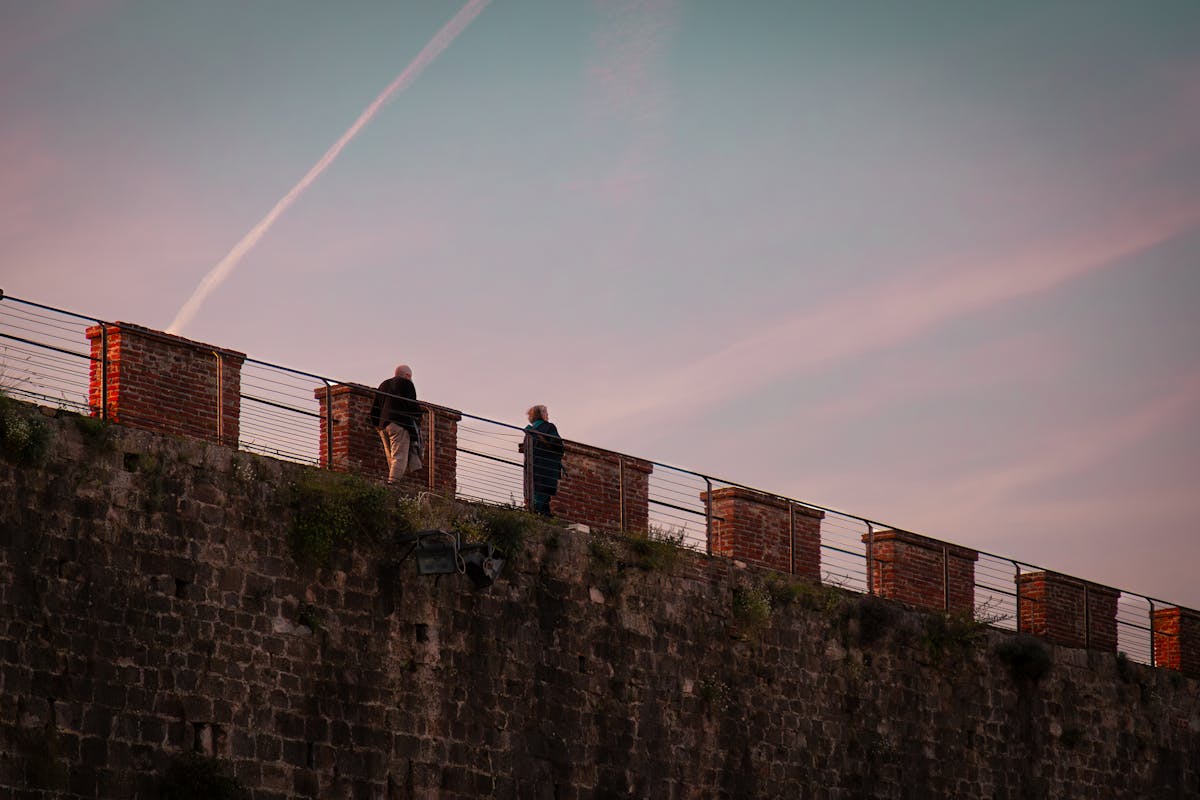
Walls, not churches, are the sight here. Le Mura di Lucca are among the best-preserved Renaissance fortifications in Europe: a 4-kilometre circuit of brick and earthwork ramparts built in stages between 1504 and the mid-seventeenth century. They never saw military use. In the 1820s Maria Luisa di Borbone converted the top into a tree-lined public promenade — a raised ring-road for pedestrians, cyclists, joggers, dog-walkers, and, on summer weekends, the city's entire population.
A full loop is comfortable in an hour on foot, faster by bike. Rental is available near the main gates; €4–€5 per hour for a standard city bike, €3–€4 more for an electric. You do not need electric. Everything is flat.
The walls deserve more time than any single church in the town. Day-trippers who spend forty-five minutes inside the Duomo and fifteen on the ramparts have, we think, inverted the ratio.
Views from the top are the ones travel writing rarely captures well. Not a panorama — ramparts are too low, and plane-trees on the inside cut the sightline. What you get instead is a cross-section: on one side, red-tiled roofs and bell-towers of the walled town in miniature; on the other, the plain running toward the foothills of the Apuan Alps. Best at the hours the low sun rakes across the brick — around 10 a.m. in spring, around 5 p.m. in summer.
| Sight / activity | Entry fee | Notes |
|---|---|---|
| Walls of Lucca (Le Mura) | Free | Open access, pedestrian and cycle |
| Bike rental (1 hour) | €4–€5 | Standard city bike; electric on request |
| Duomo di San Martino | ~€3 (cathedral + sacristy) | Combined tickets available for bell tower |
| San Michele in Foro | Free | Donations welcomed; opening hours vary |
| Casa Natale di Puccini | €9 | Via di Poggio 30; small museum, one floor |
| Regional train, Viareggio → Lucca | ~€4 one-way | 26 min direct, roughly hourly |
Piazza dell'Anfiteatro Without the Crowds
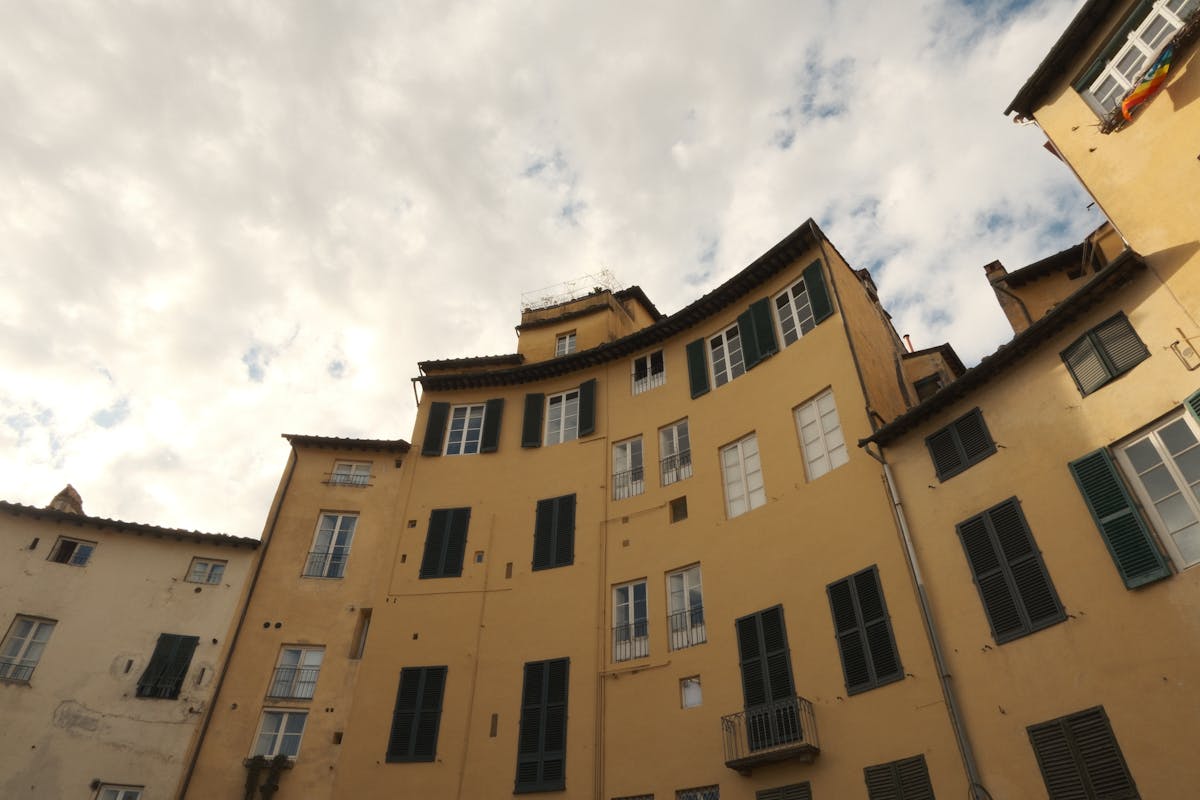
Piazza dell'Anfiteatro does an honest trick. You enter through one of four low tunnels cut into the ring of buildings and emerge into an oval about 75 metres across, surrounded by houses that follow the elliptical footprint of the second-century Roman amphitheatre they are built into. Arena floor buried under three metres of infill; the cavea survives in the masonry of the surrounding residences. One of the clearest pieces of urban archaeology in Tuscany you can stand inside for free.
Predictably, a tourist magnet. Also a restaurant trap. Cafés under the arcades are acceptable for a €3 espresso and a ten-minute sit; they are not worth a full meal. Eat one street out, along Via Fillungo or the side lanes toward San Frediano.
Best times to see the oval without the phones-up crowd: before 9.30 a.m. or after 7 p.m. Enter, circle once, leave. Seven minutes. Twenty if you sit.
The Puccini Stop
Giacomo Puccini was born at via di Poggio 30 on 22 December 1858, in a second-floor apartment now preserved as the Casa Natale di Puccini museum. Small — one floor, seven rooms, the composer's upright piano, costume designs from early productions of La Bohème and Turandot, the overcoat he wore in Paris. Admission €9. Visits take fifteen to twenty-five minutes.
A bronze Puccini sits in Piazza Cittadella directly outside, cigarette in hand. Most-photographed object in Lucca after the cathedral facade. Take the photograph; do not linger.
What to Skip
Not everything in a Lucca guidebook is worth the walk. Some honest cuts:
- Torre Guinigi. Charming from the street; the climb is a narrow €5 stair for a view you can get better from the walls, for free. Skip unless the tower itself is the reason for the trip.
- Duomo di San Martino's full interior tour. The cathedral is worth ten minutes for the facade and the Matteo Civitali tomb of Ilaria del Carretto, but the combined ticket covering crypt, sacristy and bell tower is a harder sell. San Michele in Foro, built into the footprint of the old Roman forum and free to enter, tends to be the more interesting choice.
- Lucca Summer Festival merchandise tents. If you arrive in July and find Piazza Napoleone full of scaffolding, that is the reason. The concerts are real; the daytime circus around them is not worth the detour.
- Restaurants on Piazza dell'Anfiteatro. Noted above. Worth repeating.
A remark on lunch. Lucca lacks the Versilian coast's fish economy, and ordering seafood here is a mistake day-trippers make once. Eat what the inland plain does well: tordelli lucchesi with a meat ragù, farro soup, rovelline of braised beef. Current openings are tracked sensibly on TripAdvisor's Lucca pages, with the usual caveats about ranking noise.
For the return: last regional to Viareggio typically leaves Lucca around 22:30, but the schedule thins after 21:00. Catch something mid-evening. See our entry on Viareggio Station & the Coastal Line for the onward coastal timetable; if the airport leg is still ahead, Pisa Airport to Viareggio is covered separately. For a different sort of inland day, marble rather than walls — see The Carrara Marble Quarries.