Behind a fenced perimeter on the flat reclaimed land north of central Viareggio, the Cittadella holds a ring of sixteen purpose-built hangars around an open piazza, a small museum, and an outdoor theatre that nobody from outside the town has ever heard of. For ten months of the year it functions as a workplace. For the other two it becomes the staging ground for one of the largest street-parade traditions in Italy.
Most visitors to Viareggio see only the seafront. This is a mistake. The Cittadella is a fifteen-minute walk inland and is more interesting than three of the four Liberty-era facades on Viale Marconi put together.
The Tradition, Briefly
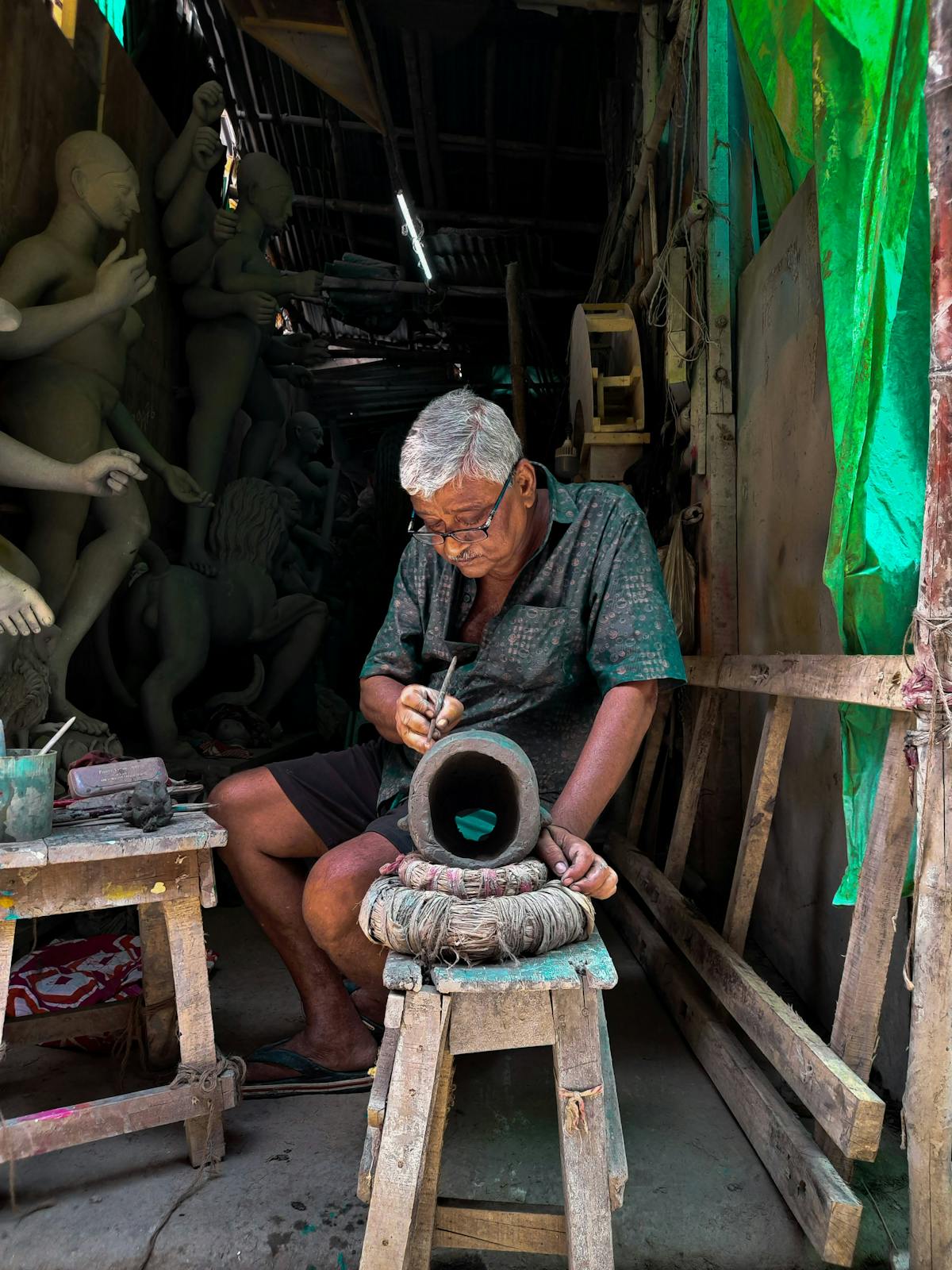
Viareggio's Carnevale dates to 1873, when — depending on which local historian one trusts — a group of well-dressed young men decided to parade along the seafront in protest at the cost of their tailoring bills, or in protest at the mayor, or both. Within a decade it was an institution. By the 1920s it had acquired the papier-mâché float — cartapesta — which is the craft for which the town is now best known, and which the Cittadella exists to serve.
Viareggio's Carnevale is, after Venice, the most famous in Italy. The two are not comparable. Venice is masks, costumes, and interiors; Viareggio is sculpture, scale, and satire. The town's floats have, over the years, depicted prime ministers, popes, football managers, television presenters, and on one memorable occasion a fifteen-metre skeletal Berlusconi. Political grievance is not incidental to the tradition. It is the tradition.
Viareggio doesn't build floats to celebrate anything. It builds floats to argue, and the argument is always on time for Shrove Tuesday.
What the Hangars Actually Are
Built in 2001, the Cittadella solved a practical problem: the town had run out of room. Until then, floats were made in scattered garages and rented warehouses around the old centre, each carrista (float-builder) making do with whatever space could be secured from November to February. Consolidation into a single site arrived late but decisively.
What a visitor sees on arrival is a circular piazza, flanked by large industrial-scale sheds with tall sliding doors. Each hangar is assigned to a working carrista and contains:
- A steel chassis, the size of a small bus, on which the float is built.
- Scaffolding up to twenty metres tall.
- Armatures in welded iron, shaped into rough body forms.
- Sacks of flour, stacks of newspaper, and vats of the flour-and-water paste still used for the outer layers.
- An electrical and pneumatic workshop for the mechanised moving parts — floats routinely feature heads that turn, arms that swing, and jaws that open on cue.
Work here is not romantic. It is physical, dirty, and — because of the flour paste — subject to intermittent mildew problems in wet winters. Carristi are paid, but not handsomely. Most are third- or fourth-generation practitioners; a few arrived via art school in Florence or Milan and stayed.
The Museum
Occupying one of the hangars near the entrance, the Museo della Cartapesta is small — an hour is enough — and its virtue is concentration. A single room walks the visitor through the craft: armature, modelling, paste-and-paper, finishing. Behind glass, a dozen preserved float-heads loom at eye-level, which is both the correct scale to appreciate them and slightly too close for comfort.
A back room shows archival footage of parades from the 1950s onward. Reels from the 1970s and 1980s, when the floats became markedly more political and the crowds markedly larger, are worth lingering over. A small bookshop carries a handful of carrista monographs not easy to find elsewhere.
Ticketing is modest — a single fare for the museum, seasonal premiums if hangar tours are included. Combined tickets with the parade itself are sold during February and are a better deal than the paper price suggests.
When to See Floats Being Built
Most guidebooks bury this detail. Floats are not built in February — they are built from late summer onward, with the decisive work happening between November and the end of January. A visitor arriving in Viareggio in August will find the hangars mostly quiet; a visitor arriving in December will find them chaotic and, on a good day, open.
The sweet spot is the second half of January. At that point:
- The armatures are finished and painted figures are emerging.
- The mechanical rigs are being tested, usually noisily, behind half-open doors.
- The carristi are working late and are often willing to talk — more so than in February, when they are exhausted and guarded.
Hangar access outside Carnevale weeks is discretionary. The Fondazione Carnevale runs scheduled tours; individual carristi sometimes wave visitors in if approached politely and with the buonasera that costs nothing. An Italian-speaking companion helps. A camera without flash is generally tolerated; a tripod is not.
Parade Logistics
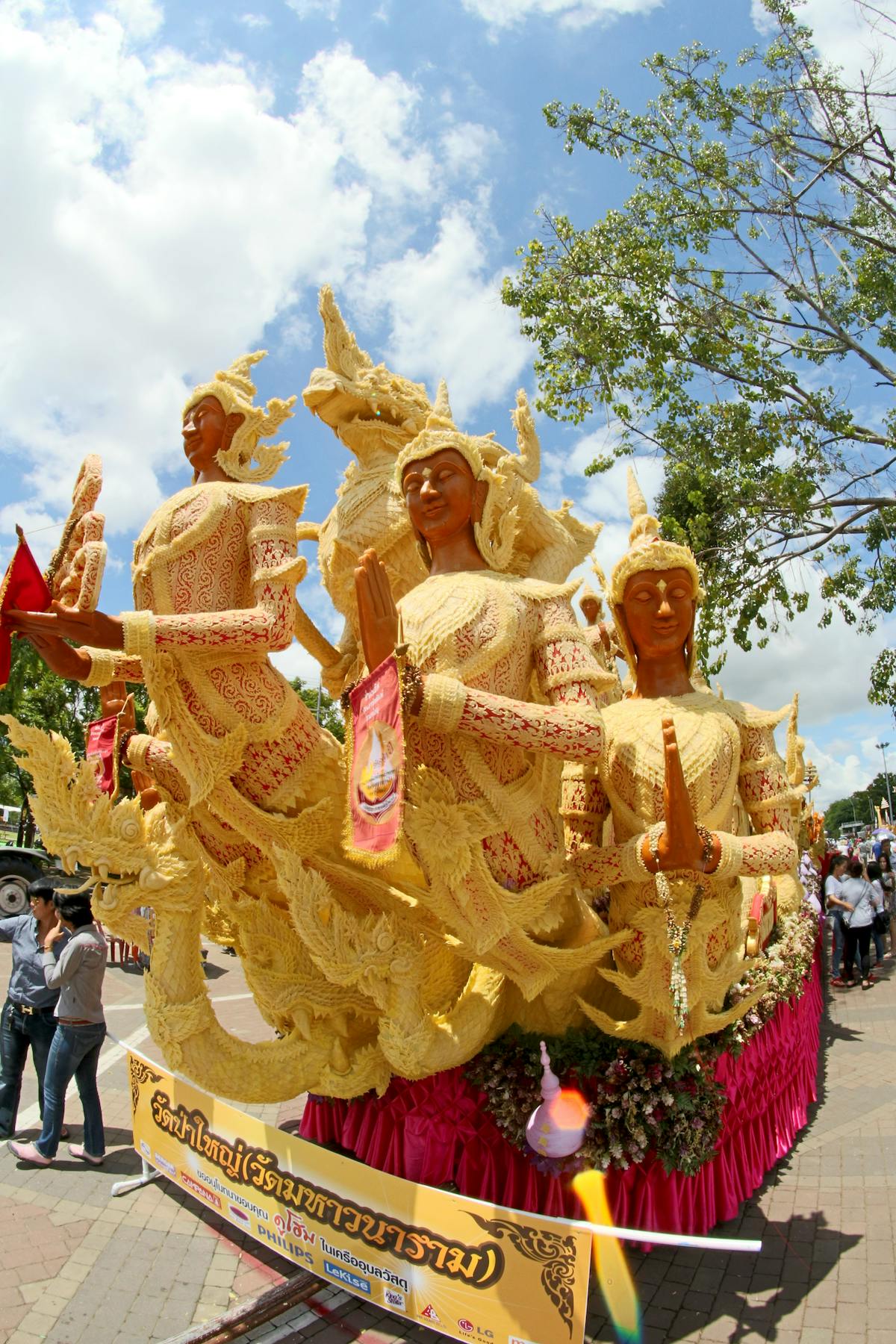
Parades — corsi mascherati — run along the seafront, not at the Cittadella itself. A looped route threads Viareggio's Viale Marconi and Viale Regina Margherita, the long Liberty-era promenade that the town was already famous for before the floats existed. Five Sundays in February plus Shrove Tuesday is the canonical calendar; dates drift each year with Easter.
| Ticket | Approx. price | What it buys |
|---|---|---|
| Single parade, standing | €20–25 | Access to the seafront ring during one Sunday parade |
| Single parade, grandstand seat | €30–40 | Reserved tribune along Viale Marconi |
| Season pass | €70–90 | All five Sundays plus Shrove Tuesday |
| Museum only | €5–8 | Museo della Cartapesta entry, year-round |
A warning on logistics: the Sunday parades begin at 15:00 and the town shuts comprehensively for several hours around them. Parking in central Viareggio on a Carnevale Sunday is a lost cause — use the regional train from Lucca or Pisa and walk. Food in the immediate parade zone is uniformly bad; eat before or after, not during.
For context on where the parade sits in the town's architectural history, read the entry on Gran Caffè Margherita & the Belle Époque Seafront — the Liberty facades along Viale Marconi are the visual register against which the floats are deliberately designed to clash. For an adjacent sculptural tradition working at an entirely different scale, see The Pietrasanta Marble Studios. Those wanting a quiet morning inland between February weekends will find Lucca as a Half-Day Trip the obvious escape. Official schedules and current float rosters are published by the Fondazione Carnevale di Viareggio; background is summarised at length on Wikipedia and, more thinly, on Lonely Planet.